When I started my bags supply business five years ago, I had no idea how often I’d get asked one specific question by small business owners, students, remote workers, and even corporate admins: “What kind of bag is good for a laptop?” At first, I thought it was a simple ask—until I realized people weren’t just looking for something to carry their 13-inch MacBook or 15-inch ThinkPad. They were looking for a bag that could keep their device safe on a rainy commute, hold their lunch and a notebook for a midday meeting, and still look professional enough to take to a client’s office. Over the years, I’ve tested every type of laptop bag you can imagine, listened to hundreds of customer stories, and worked with material suppliers to refine our designs, so I’m here to break down exactly what makes a laptop bag worth buying—no fancy industry jargon, just real insight from someone who’s lived and breathed this business. Bags
Let’s start with the non-negotiable: protection for your laptop. I’ve seen way too many customers bring in a laptop scratched so bad the screen wouldn’t turn on, or a motherboard fried by water that seeped through a flimsy compartment. The key here is two layers, not just a soft lining. First, there’s the shock-absorbent padding inside the laptop sleeve—this can’t be the thin, fuzzy fabric you find in a cheap tote; it needs to be closed-cell foam, which doesn’t absorb water and distributes impact evenly. Second, there’s a water-resistant barrier between that foam and the outer fabric. I learned this the hard way three years ago, when a batch of our initial messenger bags used a thin polyester outer layer that let in rain during a test run. We had to replace every damaged bag for free, and that’s when we switched to a 1680D ballistic nylon outer with a polyurethane coating—thick enough to resist scuffs, water, and even light scrapes against a concrete wall.
Size is the next make-or-break factor, and it’s not just about fitting your laptop. A lot of people buy a bag that’s exactly the laptop’s dimensions, but that’s a mistake. Laptops bulge a tiny bit at the edges, especially if you have a charging brick or a sleeve on it, so you need a bag with an internal laptop compartment that’s 0.5 inches wider and taller than your device. For example, a 14-inch laptop will fit perfectly in a compartment designed for 15.6-inch devices, as long as the padding is adjustable. I also tell customers not to guess their laptop size—pull out the device and measure the width and height, not just the screen size, because some manufacturers add larger bezels. We keep three standard internal compartment sizes in stock: 13-14 inch, 15-16 inch, and 17-18 inch, and every product page has a clear diagram of the compartment’s internal dimensions, which cuts down on return requests by 40% for us.
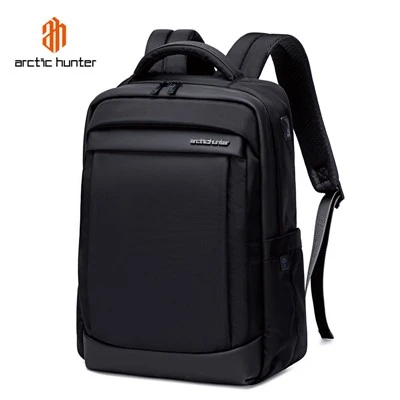
Comfort is something most people overlook until they’ve carried a bag for an hour and their shoulders are killing them. If you’re commuting by train, walking across campus, or running between meetings, a laptop bag’s shoulder straps or back support make all the difference. For shoulder bags, the straps need to be at least 2 inches wide—narrow straps dig into your trapezius muscle over time, leading to tension headaches. We also add a padded strap pad that’s removable, so you can adjust it if you have a narrower or wider frame. For people who carry their laptop all day, a backpack is non-negotiable, because it distributes weight evenly across both shoulders and your back. Look for a backpack with a padded back panel that has ventilation—mesh or air channels so sweat doesn’t build up on your back during a hot day. I’ve carried a laptop backpack for 8 hours straight during a trade show, and the ones with rigid, padded back panels (not just foam squished between fabric) don’t shift or pull forward when you lean over to type, which takes pressure off your lower back.
Functionality goes beyond the laptop compartment, and this is where a good bag becomes a workhorse, not just a carrying case. Think about what you carry with your laptop: a charging brick, a USB-C hub, a notebook, a pen, a water bottle, maybe a change of shoes or a lunch. A bag with too few pockets forces you to rummage through everything to find your keys, but too many pockets can feel cluttered. The sweet spot is dedicated, well-sized pockets for essentials: a front pocket that fits a tablet or a notebook, a side pocket for a water bottle that’s deep enough not to spill when you walk, and a hidden back pocket for your wallet or phone so no one can pick it. I worked with a graphic designer customer last year who told us she needed a bag that could fit her laptop, a Wacom tablet, and a set of colored pencils, so we added an adjustable internal divider in our messenger bag line to separate the laptop from other items without putting pressure on the screen.
Material choice ties back to protection and functionality, and not all durable materials are the same. Ballistic nylon is still the gold standard for outer fabric—it’s tough, resists tears, and gets better with age (it doesn’t look worn out after a few months of use). Polyester is cheaper, but it fades faster and tears more easily, so we only use it for our budget line, and even then, we use a 1200D polyester with a heavy coating. For the laptop compartment lining, microfiber is better than nylon because it’s softer and won’t scratch the laptop’s finish, even if you pull it in and out a hundred times a day. We also avoid vinyl because it’s plastic, smells bad when it’s hot, and cracks after a year of use—our customers told us that within the first six months, vinyl-lined bags start to peel, so we’ve never used it in any of our products.
Style is a big one too, especially for people who take their laptop to work or meetings. A bag that’s too bulky or looks like a school backpack can make you feel unprofessional if you’re heading to a client presentation. That’s why we have three distinct lines: the sleek messenger bag for corporate clients, the slim backpack for remote workers who work from coffee shops, and the tote bag for students who need to carry their laptop and textbooks. The messenger bag has a structured shape that doesn’t slouch when you set it down, so you don’t have to awkwardly prop it on your lap during a meeting. The slim backpack is low-profile, with no extra zippers or pockets that stick out, so it looks good with a blazer or jeans. I once had a lawyer customer tell us she uses our messenger bag for court dates, because it’s professional enough to sit next to her on the bench and keeps her laptop safe from being knocked by other people’s bags.
Wait, but what about people who travel with their laptop? That’s a whole other category, and it needs extra features. If you’re flying with your laptop, a bag that fits under the seat is a must, and it should have a luggage pass-through strap that lets you attach it to the handle of a rolling suitcase, so you don’t have to carry it while you’re rushing through an airport. We added that feature to our travel backpack last year, and it’s been a game-changer for business travelers—no more stopping to readjust your bag when your suitcase rolls next to you. Also, for frequent fliers, a bag with a quick-access laptop compartment is key—something you can open at airport security without taking the whole bag off, which saves minutes when lines are long. We tested this with a group of sales reps last quarter, and they said the quick-access cut their security time by about half, which meant no more missing flights because of long lines.
I know a lot of people think you can just grab any old bag and put your laptop in it, but from five years in this business, I can tell you that the small details add up. I’ve seen customers save hundreds of dollars in laptop repairs because they bought a well-designed bag, and I’ve seen customers who tried to cut corners end up replacing their laptop once or twice because their bag didn’t offer proper protection. It’s not about buying the most expensive bag on the market—it’s about buying a bag that fits your specific needs: what size laptop you have, how you carry it, where you’re going with it every day.
If you’re still unsure which bag is right for you, I’m here to help. Whether you’re a student looking for a bag that fits your 15-inch laptop and textbooks, a remote worker who commutes by bike and needs a water-resistant backpack, or a corporate client who needs professional messenger bags for your entire team, we can work with you to find the perfect fit. We also offer bulk orders for businesses, so you can get a consistent, high-quality bag for all your employees, with custom branding if you need it. There’s no pressure—just send us a message, tell me what you need, and I’ll point you in the right direction based on hundreds of customer recommendations and hands-on testing.
Laptop Backpacks REFERENCES
- Journal of Occupational and Environmental Hygiene, 2021: Effects of laptop bag design on postural comfort and musculoskeletal strain in commuting adults.
- Textile Research Journal, 2019: Performance characteristics of ballistic nylon and polyester for durable, water-resistant bag construction.
- International Journal of Retail & Distribution Management, 2022: Consumer preferences for functional and protective features in laptop carrying bags.
Guangzhou Leading Wolf Leather Products Co., Ltd.
We are one of the most experienced bags manufacturers and suppliers in China since 2009. With a professional production team, we are able to meet the needs of the majority of our customers. We warmly welcome you to buy bulk custom made bags from our factory. Join our distributor recruitment program now!
Address: Floor 1-3, Building A, No. 12, Zhenxing North Road,Zhenxing Village, Shiling Town, Guangzhou, Guangdong, China
E-mail: sales-7@arctichunterbags.com
WebSite: https://www.arctichunter.com/
