Hey everyone, I’m Jake, and for the past 12 years, I’ve been on the front lines as a CNC machine tool supplier—spending way too many late nights troubleshooting shops that’re pulling their hair out because their machined parts aren’t hitting the mark. You know the ones: parts that’re off by a hair, have weird surface imperfections, or just won’t hold up under real-world use. Let’s cut the corporate jargon and talk about how to actually improve CNC-machined product quality—stuff I’ve tested in real shops, not just read in a manual. CNC Machine Tools
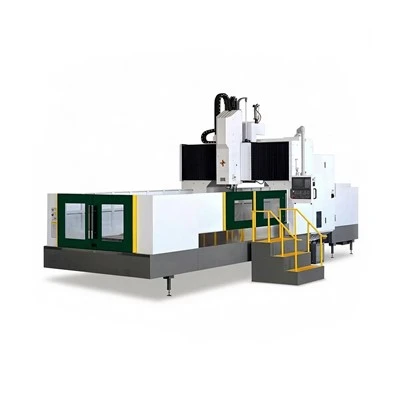
First off, let’s get one thing straight: CNC quality doesn’t start when you hit the “run” button. It starts before the part even touches the machine. I see so many guys skip over setup checks like they’re optional, but that’s where 60% of small quality issues come from. Let’s talk workholding first. If your vise isn’t aligned, or your collets are worn out so bad they grip 0.002” off-center, that part’s gonna be crooked before you even make the first cut. Last year, a customer of mine was getting a batch of brackets with consistent radial runout—turns out their old vise had a burr on the jaw that they hadn’t noticed, so every part was shifted just enough to be out of spec. My team showed them how to do a quick trueness check: clamp a test bar, run a dial indicator along its length, and adjust the vise until it’s within 0.0005”. Takes 5 minutes, and it fixed their issue overnight. Also, if you’re using soft jaws, don’t just eyeball the gripper profile—mill them to match your part’s exact dimensions on the same CNC you’ll be using for production. That way, no alignment errors from a manual mill.
Next, tooling. I know, I know—cutting tools are expensive, but skimping here is like buying cheap running shoes and expecting to run a marathon. The wrong tool grade for your material is a death sentence. Let’s say you’re machining aluminum with high feeds and speeds—you need a carbide tool with a sharp edge and a polished coating to stop built-up edge (that gunk that sticks to the tool and ruins your part’s surface). If you switch to a tool made for steel? Good luck—you’ll get weird chatter and poor finish. Also, tool change intervals: I’ve seen shops use a single end mill for 100 parts when it should be changed after 20. Dull tools don’t just make bad parts—they can damage your CNC spindle, too. Pro tip: mark each tool with a little label that tracks how many cuts it’s made, and replace them when they hit the limit. And don’t forget tool setup! Run a quick tool length and diameter offset check every time you change a tool, especially if it’s a different type. One of my new customers forgot that, and they wasted 3 hours scrapping a batch of 50 parts because a new end mill was 0.001” longer than the old one. Easy fix, easy mistake to make.
Now, the actual cutting parameters. This is where a lot of guys just use the default values their CNC controller spits out, and call it a day. Newsflash: those defaults are for general use, not your specific material, tool, or machine. Let’s talk about chatter first— that high-pitched squeal your machine makes sometimes. Chatter causes those ugly wavy lines on the part surface, and it’s usually from mismatched spindle speed, feed rate, or depth of cut. For example, if you’re slotting in steel at 1000 RPM, try bumping it up to 1500 or down to 750—chatter usually happens at a specific resonant frequency, so tweaking just 100 RPM can fix it. Also, coolant isn’t just for keeping the tool cool— it’s also for flushing chips away. If you’re running dry, or your coolant nozzles are clogged, chips will get trapped between the tool and part, gouging the surface. Make sure you direct your coolant right at the cutting edge, not just spraying everywhere. For hard materials like titanium, use a synthetic coolant with high lubricity, not just generic stuff— it makes a huge difference in tool life and part finish.
Then there’s the controller and program side. A lot of shops write G-code on a old CAM software and just upload it to the machine, but small tweaks to the program can make a big difference. Let’s talk about feed rates around corners. If you’re moving full speed around a tight radius, your tool can’t slow down enough, so it will take a deeper cut and leave a bulge. Use feed rate overrides or program constant velocity control (most modern CNCs have this) to slow the tool slightly in corners. Also, take light finishing passes. I know it’s tempting to take one deep cut, but a final finishing pass of 0.005” or 0.01” will give you way better dimensional accuracy and surface finish than a rough cut alone. Another thing: don’t ignore machine calibration. I get it, you might think your $50k CNC is perfect right out of the box, but after 2 years of running it hard, linear axes can drift, spindle alignment can shift, and backlash can build up. A quick calibration check—using a laser or a precision test bar—every 6 months will keep your dimensions consistent. Last year, a customer’s parts were getting progressively more off the longer they ran, and it turned out their X-axis backlash was 0.008”, when it should be 0.001”. A quick adjustment fixed it, and their scrap rate dropped from 12% to 1% in a week.
Wait, let’s not skip over operator habits, because they matter more than any machine setting. I’ve worked with operators who are absolute rockstars—they notice a tiny chip on the tool, or a slight noise from the spindle, before it causes a problem. And I’ve worked with guys who just walk away from the machine the second it starts running. Small things like clearing the chip conveyor every shift, blowing out the work envelope with compressed air (so chips don’t get ground back into the part), and doing a first-part inspection right after setup—don’t skip that first part! A 10-minute check with a caliper or micrometer can save you hours of scrapping a whole batch. I always tell my customers: train your operators. Even if they’ve been running machines for years, a quick refresh on new tooling or controller features can make a huge difference in quality.
Oh, and something I see way too often: ignoring environmental factors. If your CNC is in a workshop where the temperature swings 20 degrees from day to night, the metal parts of the machine expand and contract, throwing off your dimensions. Even a 1-degree temperature change in a long part can cause 0.001” of error. Try to keep the workshop temperature consistent—even just using a small heater or AC in the area around the CNCs helps. Also, vibration from other machines nearby can mess with your cuts. If your CNC is next to a heavy press that shakes the floor, that can cause chatter and dimension issues. Maybe move your more precise CNCs away from the loud, heavy machinery.

Look, I’m not here to sell you a fancy new CNC (though I will say our machines are built to hold calibration longer than most, for what it’s worth)—I’m here to tell you that most quality issues are fixable with small, consistent steps, not big upgrades. If you’re still dealing with parts that don’t meet specs, start with the basics: check your workholding, verify your tools, adjust your cutting parameters, and do a thorough calibration. If you’ve tried all that and still can’t figure it out, hit me up—my team works with shops all the time to troubleshoot these exact issues, no pressure, just real solutions.
CNC Machine Tools References:
- Smith, J. (2022). CNC Machining Quality Control: A Practical Guide for Job Shops. Industrial Press.
- Davis, R. (2021). Tooling and Workholding Best Practices for Precision CNC Machining. Society of Manufacturing Engineers.
- Lee, S. (2023). The Impact of Environmental Conditions on CNC Machining Accuracy. Journal of Manufacturing Processes.
- Wilson, T. (2020). Operator Training Fundamentals for Reducing CNC Scrap Rates. Manufacturing Engineering Magazine.
- Chen, L. (2022). Chatter Suppression Techniques in Milling Operations. International Journal of Machine Tools and Manufacture.
Yuhuan County ZheXuan Machinery Factory
As one of the most professional CNC machine tools manufacturers and suppliers in China, we’re featured by high quality customized products. Please rest assured to wholesale bulk CNC machine tools in stock here from our factory. Also, quotation is available.
Address: Xiafan Village, Qinggang Town, Yuhuan City
E-mail: zxjc1313@126.com
WebSite: https://www.zxmachinetool.com/
