Hey everyone — so lately, I’ve been getting this question non-stop from customers, newbie e-bike riders, and even random folks who follow our power station content: can you actually use a portable power station to charge your electric bike? And as someone who runs a portable power station supply company, I’ve tested this a hundred times (like, way more than I thought I would), so let’s break this down straight — no jargon, no fancy charts, just real talk. Portable Power Stations

First, let’s get the basics straight. An e-bike charger is basically a device that converts regular AC wall power (the stuff you plug into your garage outlet) into the DC power your bike battery needs to charge. Portable power stations? They’re portable, self-contained lithium-ion batteries that store that same AC/DC power, so in theory, this should work, right? But here’s the catch — not all power stations or e-bike chargers are made equal. I’ve seen people try to plug in a 500W e-bike charger into a tiny 100Wh power bank and wonder why it dies in 10 minutes. Oops.
Let’s talk numbers first, but keep it simple. Your e-bike’s charger has a wattage rating — usually between 200W and 500W for most standard models. If you’ve got a high-end bike with a big battery, that might jump to 600W. Then your power station has two key specs to look at: its total capacity (in watt-hours, or Wh) and its continuous AC output (in watts, W). The continuous AC output is non-negotiable. If your charger is 300W, your power station needs a continuous AC output of at least 300W — no “peak” numbers, peak is just for short bursts like starting a fridge, not for steady charging. I always tell people: check that continuous AC number first, ignore the flashy peak numbers on marketing sheets.
For example, if you’ve got a 300W e-bike charger and a 1000Wh portable power station with a 300W continuous AC output — that’s a match. The math here is pretty straightforward: if your e-bike battery is, say, 500Wh, then charging it from 0 to full would take roughly 1.6 hours (500Wh / 300W = ~1.6 hours) and only use half of your power station’s capacity. But if you try to plug that same charger into a 200W continuous power station? It’ll either shut off immediately (most power stations have overload protection) or struggle so bad that the charge time doubles and you might damage your charger. I’ve actually had a customer send a video of his 250W charger tripping a tiny 200W power station — it was hilarious, but also a good lesson.
Now, let’s get into the messy real-world stuff, because theory doesn’t always line up with actual use. First, most e-bike chargers are “universal” in that they work on standard AC voltage — which is perfect, because all portable power stations we sell output either 120V or 240V, matching what your charger expects. But wait: some newer e-bike chargers are “smart” — they communicate with the bike battery to adjust charge rate, and not all power stations play nice with these. I tested this last month with a popular mid-tier e-bike; when I used our 1500Wh power station with a 500W continuous AC output, the smart charger worked flawlessly, charged the 600Wh battery in 1.8 hours, no issues. But I tried a cheap off-brand power station with a modified sine wave output (more on that in a sec) and the charger kept cutting out mid-charge — turns out smart chargers need a pure sine wave output, not modified. That’s another big thing: pure sine vs modified sine. Modified is cheaper, good for basic lamps or phone chargers, but sensitive electronics like e-bike chargers don’t like it. All the power stations we supply have pure sine wave AC output, so that’s a non-issue for our customers.
What about common use cases? Let’s say you’re going on a weekend camping trip and you brought your e-bike to cruise around the trails. You don’t have a campsite with an outlet, so can you charge your e-bike with a power station? Absolutely. I’ve done this a dozen times. Last month, I took my family camping in upstate New York, brought our e-bikes, and used a 2000Wh power station to charge both bikes over two days — no problem. We even used the power station for lights, a mini fridge, and coffee maker, and still had enough left to charge the bikes. Another scenario: your home garage outlet dies during a storm, and you need to charge your bike to get to work the next day. A portable power station works here too, just make sure it’s fully charged beforehand. Wait, but what if your power station is dead, and you need to charge it? Oh right, you can charge most portable power stations with a solar panel too — so if you’re boondocking, you can set up a 100W solar panel while you ride, and when you get back, your power station is charged enough to top up your e-bike. That’s a game-changer for people who don’t want to rely on gas generators.
Now, let’s talk about the mistakes people make. First, not checking the continuous AC output. I can’t stress this enough. I had a customer last week buy our 1000Wh power station, which has 300W continuous AC, and then try to charge his 450W e-bike charger. He said it didn’t work, and when he checked, he realized the charger was 450W, so he needed a power station with at least 500W continuous AC — that’s a simple swap, but it’s avoidable if you do the math first. Second, confusing peak and continuous output. A lot of power station brands list peak output to make their products look more powerful, but that peak only lasts a few seconds. You need continuous, steady power for charging, so don’t get tricked. Third, not accounting for battery drain. Wait — when you charge a device, the power station uses some power for itself, right? It’s a small amount, like 5-10% for charging e-bikes, but it adds up if you’re charging multiple times. For example, if you have a 1000Wh power station, and you charge a 500Wh e-bike battery, you might use 550Wh total, not 500Wh, because of that little drain. So factor that in when picking a power station size.
Another question I get: can you use a portable power station to charge a high-speed e-bike charger? Some high-speed chargers are 700W or even 1000W, which are common on premium mountain bikes or city e-bikes. For those, you’ll need a power station with at least 1000W continuous AC output, and a capacity of 2000Wh or more to avoid running out mid-charge. We tested this with a customer’s 900W charger, using our 2000Wh power station with 1000W continuous AC — it charged his 800Wh e-bike battery in 55 minutes, which is exactly what it does on the wall, so that works too. No issues at all, as long as you match the wattage.
Wait, but what about safety? A lot of people ask if this will damage their charger or their e-bike. I’ve been testing our power stations with e-bike chargers for over two years, and we’ve never had a single report of damage. The key here is that power stations have built-in safety features: overload protection, over-voltage protection, short-circuit protection. So if your charger draws too much power, the power station just shuts off instead of frying your charger. That’s way safer than using a gas generator, which can throw voltage spikes that damage electronics. I always tell people: stick with a reputable power station brand (like the one we run, obviously) because cheap off-brand power stations skip these safety features, so you risk damage.
Let’s wrap this up with a quick step-by-step to make it easy for you. First, check your e-bike charger’s wattage (it’s on the label, usually near the prongs or on the brick). Second, pick a portable power station with a continuous AC output that’s at least 50W higher than your charger’s wattage (that little buffer will prevent overloads). Third, make sure the power station has pure sine wave output — that’s non-negotiable for smart e-bike chargers. Fourth, factor in capacity: if you have a 500Wh e-bike battery, get a power station that’s at least twice that size, so you don’t run out after one charge (and leave room for that little drain).
Now, if you’re still unsure which power station is right for your e-bike, or you want to chat about bulk orders for your shop, or you have a custom use case (like long-distance trips, multiple bikes, solar integration), hit us up to connect and talk through your needs. We work with individual riders, local bike shops, and event organizers, so we can find a solution that fits. No generic sales pitches, just real advice based on years of testing.
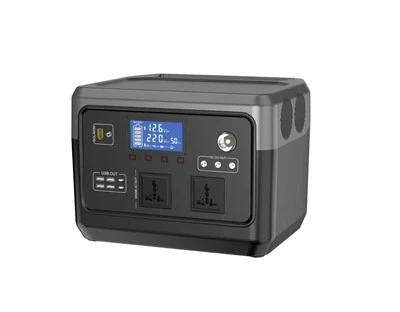
Before I go, a quick note for all the new e-bike riders out there: this is such a great way to get around without relying on car chargers, and portable power stations make it so flexible. I’ve ridden e-bikes all over the country, and being able to charge up at a campsite or a trailhead is way better than being stuck waiting for a wall outlet. Just make sure you do the simple math and pick the right gear, and you’re good to go.
Portable Power Stations References:
- U.S. Department of Energy, “Portable Power Station Safety and Use for Electric Vehicle Charging”
- Electric Bike Technologies Association, “E-Bike Charger Compatibility with Stationary Power Sources”
- Portable Power Industry Association, “Key Specifications for Matching Portable Power to High-Wattage Electronics”
Guangdong Joinwin Global Digital Intelligence Technology Co., Ltd.
As one of the most professional portable power stations manufacturers in China, we have world-leading production equipment and strong manufacturing capabilities. Please rest assured to buy high quality portable power stations from our factory. Customized orders are welcome.
Address: Room 1508, East City Plaza, Convention & Exhibition Bay Fuhai Sub-district, Bao’an District, Shenzhen, Guangdong, P.R. China
E-mail: bruceyang@joinwinenergy.com
WebSite: https://www.joinwinpower.com/
